Physician Directory · Metro Atlanta
Not all knee pain is the same, and not every doctor treats it the same way. This directory helps you find an Atlanta specialist whose approach actually matches your diagnosis — particularly for patellar tendinopathy, commonly known as jumper's knee.
Patient Experience
Below, a patient treated for chronic patellar tendinitis describes the procedure and the recovery that followed.
TenJet Patient Testimonial - Chronic Patellar Tendinitis (Jumper's Knee)
Video courtesy of HydroCision, Inc., the maker of TenJet®. Individual results vary; this patient's experience is not a guarantee of outcome. Talk with a specialist about whether the procedure is appropriate for you.
Choosing a Specialist
General knee pain covers a wide range of underlying causes — arthritis, meniscus tears, ligament injuries, and tendinopathy all present differently and call for different specialists.
The Procedure
Once a physician confirms your knee pain is coming from the patellar tendon rather than the joint itself, TenJet is one of the in-office options they may discuss. It's manufactured by HydroCision, Inc. and used to treat degenerated tendon tissue through a small incision, guided by ultrasound rather than open surgery.
See The Procedure
Official demonstration video from HydroCision, the maker of TenJet, plus a look at how tendinitis differs from the deeper tissue degeneration TenJet is designed to treat.
TenJet Patella Tendinosis Minimally Invasive Tenotomy


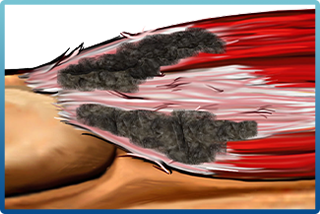
Diagrams and video courtesy of HydroCision, Inc.
Common Questions
Patellar tendinopathy — degeneration of the tendon below the kneecap. It is common in sports involving repeated jumping and deceleration, but occurs outside sport as well.
No. It addresses tendon degeneration rather than joint cartilage wear. Knee arthritis is a different problem requiring a different approach entirely.
In a published patellar case a soccer player began a gradual return at twelve weeks, after staged rehabilitation. Timelines vary with the sport and the extent of degeneration.
Possibly. One documented case used a hinged brace locked at 30 degrees for the first two weeks because of the size of the lesion treated.
This information is general and is not medical advice. Whether any procedure is appropriate for you can only be determined by a physician who has examined you and reviewed your imaging.